

It all comes down to the first click
When architects visit a manufacturer’s website they don’t know, their first click is almost always the same: they go to the reference projects. This is where, within seconds, they decide whether they see the company as a competent partner or keep scrolling.
»We rarely start with a concrete image, but a good reference gives us a clear idea,« is how Anni Rosenberg of brandherm + krumrey interior architecture, a member of our Architecture Advisory Board, describes her approach.
This matches what we see in our projects: reference projects are one of the most important and productive tools for communication in the specification-led project business. At the same time, we regularly see companies fail at this point. Not for lack of will, but because misconceptions get in the way of success.
Clearing up the misconceptions
Myth 1: only well-known projects convince
The most common misbelief: reference projects have to be spectacular and widely known. Prestige projects such as the Burj Khalifa or a luxury hotel are often on the wish list, particularly of sales teams. But architects are more interested in a well-thought-out primary school than in superlatives.
What matters is not how well known a project is but its architectural quality and how it solves specific design challenges. An educational building with sustainable solutions convinces design teams more than a prominent address alone.
Myth 2: size equals relevance
Project size is secondary too. Architects are looking for inspiration and technical solutions, not always just the Elbphilharmonie or the latest shopping centre. A well-thought-out detail in a 50-square-metre project can be more valuable than superficial presentations of large buildings. The holiday home »Kleine Bleibe« by Fröhlich Gaßner Architekten made it onto the shortlist of the renowned architecture prize of the BDA (the Association of German Architects). That is a clearer signal of quality than any prominent large building.
Myth 3: the product has to be visible
Another misconception: only visible products are suitable for reference projects. Wrong. Technical or structural products in particular (from roofing underlay to tile adhesive) benefit from professional reference communication. What matters is that the building product manufacturer shows that it contributed to the quality and durability of the project, and how.
What architects are really looking for
The target group’s expectations can be divided into three core needs:
Inspiration before information
»We need references that show their effect. In the space, in the light, in the detail,« is how Anni Rosenberg explains what she needs from manufacturers’ reference projects. Architects use reference projects as a visual research pool for their own projects. They collect ideas on Pinterest boards, save posts on Instagram and comb through website galleries in search of the perfect detail.
For manufacturers, this means: reference projects have to go beyond pure product presentation. They open the door to architects’ world of inspiration, and that often happens at the boundary between work and leisure. Your own product doesn’t have to be visible in every photo either.
Reassurance from peers
Architects work project by project and carry a lot of responsibility. Before they specify a product, they look for rational reassurance: have colleagues already used it successfully?
Reference projects provide this confirmation. They show that other design practices have already trusted the manufacturer and its products. Especially important: the product should be shown as installed.
Architectural competence builds trust
»It’s not just about design, it’s about identification,« is how Claudia Radinger of studio applaus puts it. The most critical point: can you as a manufacturer tell good architecture from bad? This question decides between trust and rejection. Architects want to work with partners who speak their language or at least understand their standards.
From chance finds to strategy
The biggest hurdle is not preparing individual reference projects but the lack of a system. »Moving away from case-by-case decisions towards clear criteria and processes: that’s a big lever for you,« says Katarina Wicht, our expert in reference processes, summing up the central problem.
In practice, this means:
Where do reference projects come from? Sometimes sales reports a project, sometimes marketing stumbles across a photo in a trade magazine. Who decides how they are prepared? Different people, depending on who is available. What budget is available? Decided case by case.
The eight key questions
Successful reference communication starts with strategic clarity. In our projects, eight questions have proven central:
What goals is the reference communication meant to achieve?
Through which channels should reference projects be communicated?
How can reference projects be used for further content?
Which target groups are we primarily addressing?
How do marketing and sales work together?
Which building types are the focus?
Which lessons from experience should be fed in?
How much weight do reference projects carry in the marketing budget?
Marketing and sales should answer these questions together. Only then can you get the most out of every single reference project.
Say Hej: Let’s work out your answers to these eight questions together and take a first, over-the-shoulder look at your company. Book a 45-minute online session with Saskja here.
The reference workflow in practice
A working reference process stands or falls with systematic project identification. This is where many companies fail.
Three proven ways to identify projects
Newsletter screening: Subscribe to editorial newsletters from the architecture world (Baunetz, Detail, architektur.aktuell) and scan them systematically for projects that use your products. This method regularly uncovers reference projects that were not yet known internally.
CRM integration: Define clear criteria for »reference-worthy« projects and add a simple checkbox to the CRM. That way, sales and the inside sales team can flag potential reference projects straight away.
Network of multipliers: Build relationships with architectural photographers who let you know about new projects. Professional photographers often have lists of manufacturer contacts and check on shoots whose products have been installed.
The professional reference request
Contact the architecture practice before the photographer: Even though the copyright always lies with the photographers, the first contact should be with the practice that designed the project. This shows appreciation and opens doors to further collaboration.
Favour smaller practices: Established large practices receive reference requests every day. Smaller practices are often more open and value the reach that manufacturers can offer.
Standardise rights of use: Develop templates for usage agreements. This reduces complexity and prevents a situation where, years later, nobody knows what you are allowed to use which images for.
Enter into creative partnerships: Give photographers room to manoeuvre instead of detailed briefs. »Only in sunshine, four overview shots in diagonal perspective« leads to interchangeable results. Storytelling needs flexibility.
Partnerships as a success factor
Working together on reference projects creates win-win situations for everyone involved.
Joint photo shoots
Share costs and effort with architecture practices or other manufacturers. This makes more elaborate productions possible. Everyone can bring in their specific requirements without carrying the whole budget.
Celebrating awards and successes together
Support architecture practices in submitting outstanding projects for architecture prizes. This rarely used strategy has a lot of potential: by funding professional documentation or communicating successes together, you turn reference projects into long-term partnerships and multiply your reach.
Showing appreciation for everyone
In reference stories, always name everyone involved: architects, photographers, specialist engineering consultants (building services, structure, fire safety). This appreciation opens doors for future collaboration.
More than just a website topic
The classic reference story on the website is only the beginning. Anyone who uses reference projects strategically develops different formats and applications.
The ideal reference story
Successful reference stories work on several levels of reading:
Large images for visual inspiration
Short text blocks for quick information
Detail photos for technical insight
Quotes from people involved in the project for authenticity
Fact sheet with all the relevant data
Important: Tell the story of the project, not just the story of your product. What challenges had to be solved? What particular requirements were there? How do your products contribute to the architectural quality? Ask the architecture practices concerned for the details.
Reuse maximises the value
Data from our architecture newsletter for Gira shows: reference projects perform significantly better than any other newsletter content. Make use of this interest:
Newsletter: Present individual reference projects in detail or bundle several projects into a themed newsletter
Social media: Collect individual project images for Pinterest boards (early design stage), detailed project descriptions with technical details for LinkedIn posts
Print: Photo books or brochures with selected reference projects for customer meetings and trade fairs
White papers: 10–20-page technical case studies with design details, challenges and approaches to solutions
Best practices from real projects
How a tiny house became a strong reference project
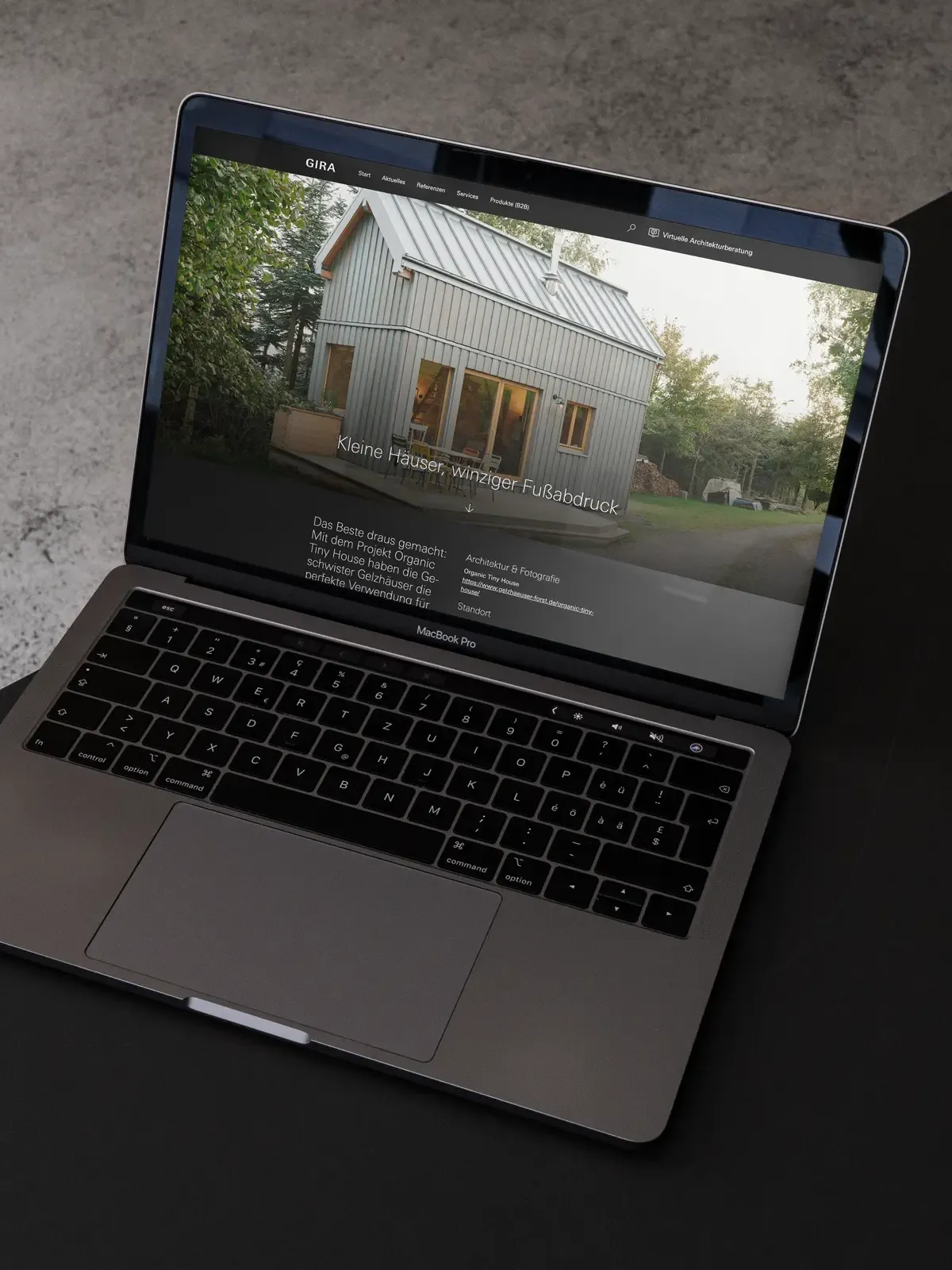
One of the most successful reference projects we have prepared for Gira is a tiny house: 25 square metres of high architectural quality. The reference works because it tells a story: how do you meet complex technical requirements in the smallest of spaces?
Staging materials with detail shoots
Add your own detail shoots to existing project photos. Bring your products together with materials from the reference project and so broaden the visual language. This works particularly well for technical products, which often get lost in architectural photography.
Content clusters for editorial topics
Don’t look at reference projects in isolation; develop themes instead: »Five examples of sustainable school building« or »New facade solutions in housing«. These clusters create new editorial opportunities and strengthen your positioning as experts.
Pinterest is underrated as a source of inspiration
»I don’t know a single architect who doesn’t work with Pinterest. At least in the early work stages,« says Angelika van Putten of STUDIO van PUTTEN. This insight from our Architecture Advisory Board underlines how important visual research is for design practices.
Pinterest works as a digital mood board for the early HOAI work stages (the work stages defined in Germany’s fee scale for architects and engineers), long before specific product decisions are made. Manufacturers who are present here position themselves in the decisive phase of inspiration.
Avoiding the most common pitfalls
Motivating sales to take part
The problem: Sales is often overloaded and sees documenting reference projects as an extra task. The solution: Create simple reporting systems (a Teams channel, a CRM checkbox) and show sales the direct benefit. Well-prepared reference projects are strong sales arguments.
Handling rights of use sensibly
Develop standard usage agreements that are acceptable to everyone involved. Avoid legal »damage-limitation prose« and go for clear agreements based on partnership.
Spending the budget wisely
Invest in a few professionally prepared reference projects rather than many mediocre ones. One well-prepared project achieves more than ten badly photographed ones.
Using reference projects strategically
Successful reference communication combines a systematic approach with creative presentation. It thinks in solutions rather than products and uses every reference project as a starting point for further content.
The lever lies in the system: away from case-by-case decisions, towards clear processes and defined goals. Anyone who takes this step not only gains one of the best communication tools in the project business but also builds trust with design teams.
Say Hej: Would you like to build up your reference projects strategically? Book a free initial call and find out how other manufacturers go about it successfully. Book a 45-minute online session with Saskja.